There are two possible training paths to become a pilot.
The first option we will discuss is Part 61 training. This option is available to US citizens or those with US residency. It is considered to be the most flexible of the two options as training in this way can be customized and has no set end date. This can be helpful as the students may keep a schedule for themselves that if needed can be conducted around other commitments they may have.
The second option is Part 141 training. This is considered a more formal training route as it is a structured training program with a set course timeframe. It is the only option available to our international students. It is a preferred option by students who are in a position to have flight training as their main priority.
Flight training under Part 141
There are four stages of flight training under FAA Part 141:
The Private Pilot’s License is the first step in any pilot training journey. It is a course which is completed in five weeks with us here at Global Flight Training Solutions. It consists of 35 hours of flight time, of which 30 hours are dual (with an instructor), and 5 hours are solo. These flights will be a variety of both local and cross-country flights, including three hours of night flights. There is both a written and practical flight test to achieve a Private Pilot Certificate. Once you have this first stage completed you will be allowed to fly solo on your own license and with passengers should you like but not for compensation or for hire. It is considered a “license to learn”.
Now that you have achieved a Private Pilot’s License, you may begin training using only flight instruments. The rating consists of 35 hours of dual flight time along with both a written and practical flight test to be completed within six weeks. Being instrument rated makes for an even safer pilot as it allows you to fly in weather conditions that would be considered off limits to someone who has a private license only. With this rating you will enhance both your skills and confidence as a pilot.
At this point of your training career, you will have a great understanding of how to safely fly in all weather conditions. Now it is time to learn how to not spill the drinks of your passengers sitting behind you! To do this you will have nine weeks to fly dual flights with an instructor while also at times flying solo to “build time” in the air. The more experience you have as a pilot, the safer you are and with an abundance of airports available in South- West Florida there is plenty of experience to be had. Some schools allow their students to plan their own trips very much so being left to their own devices. This frequently leads to the students feeling unmotivated and perhaps bored as they will get into a routine of flying to the same few airports and back each day, never pushing their envelope to see what else could be available to them. Here at Global Flight Training Solutions, we believe that every step of your training should be conducted with purpose. This is why we have developed the “Airline Compatible Roster Program” to ensure each time building flight has a goal to achieve ultimately making for a more motivated and passionate pilot. When you are not spreading your wings and building your hours in the sky solo, you will be completing dual flights to finely tune your skills as a soon to be commercial pilot. The margin for error in the commercial flight test is smaller than for the Private Pilot’s License. As you have more experience now, more is to be expected of you. You will fly 55 hours Dual and 65 hours solo during this course. Once you have completed the lessons and passed both the written and flight test for this course you will be eligible to fly for hire in a single-engine aircraft.
source.
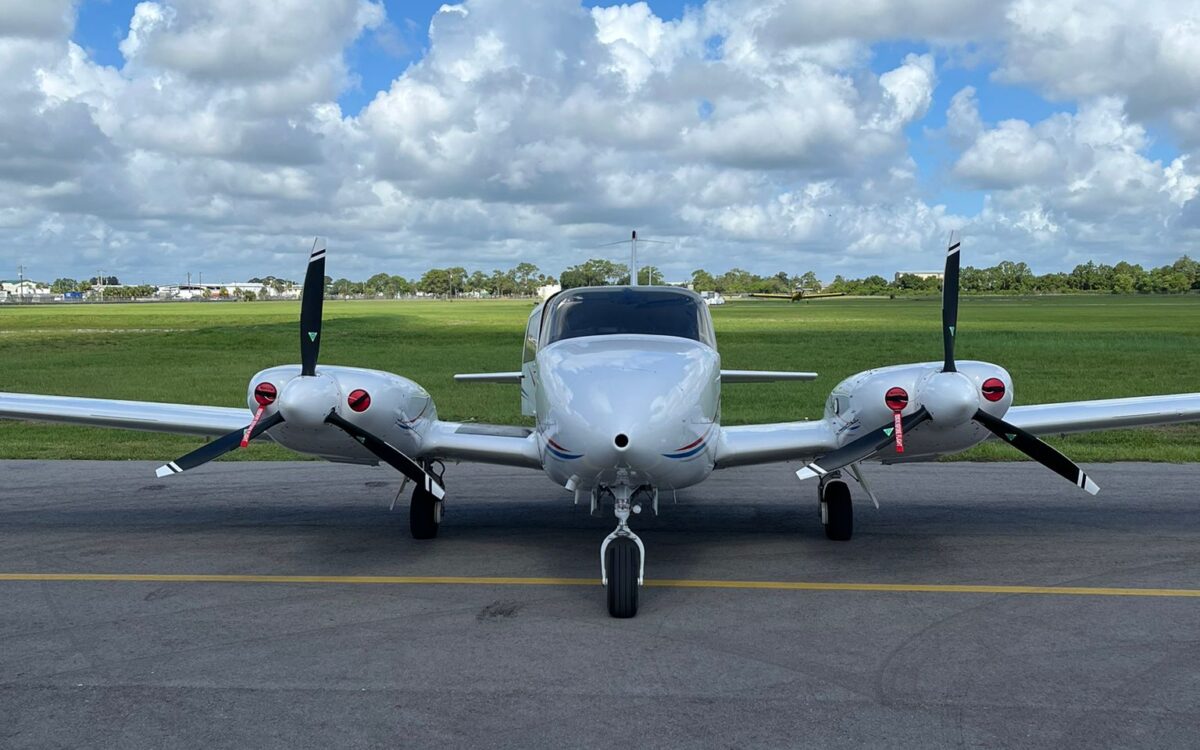
This course, as it may imply, will be conducted in a twin-engine aircraft unlike all previous training which was conducted in a single-engine aircraft. This addition to your commercial license will take 12 hours of flight training along with a flight test. Once completed, you will be eligible for both compensation and hire in multi-engine aircraft.
There are two possible training paths to become a pilot.
The first option we will discuss is Part 61 training. This option is available to US citizens or those with US residency. It is considered to be the most flexible of the two options as training in this way can be customized and has no set end date. This can be helpful as the students may keep a schedule for themselves that if needed can be conducted around other commitments they may have.
The second option is Part 141 training. This is considered a more formal training route as it is a structured training program with a set course timeframe. It is the only option available to our international students. It is a preferred option by students who are in a position to have flight training as their main priority.
Flight training under Part 141
There are four stages of flight training under FAA Part 141:
The Private Pilot’s License is the first step in any pilot training journey. It is a course which is completed in five weeks with us here at Global Flight Training Solutions. It consists of 35 hours of flight time, of which 30 hours are dual (with an instructor), and 5 hours are solo. These flights will be a variety of both local and cross-country flights, including three hours of night flights. There is both a written and practical flight test to achieve a Private Pilot Certificate. Once you have this first stage completed you will be allowed to fly solo on your own license and with passengers should you like but not for compensation or for hire. It is considered a “license to learn”.
Now that you have achieved a Private Pilot’s License, you may begin training using only flight instruments. The rating consists of 35 hours of dual flight time along with both a written and practical flight test to be completed within six weeks. Being instrument rated makes for an even safer pilot as it allows you to fly in weather conditions that would be considered off limits to someone who has a private license only. With this rating you will enhance both your skills and confidence as a pilot.
At this point of your training career, you will have a great understanding of how to safely fly in all weather conditions. Now it is time to learn how to not spill the drinks of your passengers sitting behind you! To do this you will have nine weeks to fly dual flights with an instructor while also at times flying solo to “build time” in the air. The more experience you have as a pilot, the safer you are and with an abundance of airports available in South- West Florida there is plenty of experience to be had. Some schools allow their students to plan their own trips very much so being left to their own devices. This frequently leads to the students feeling unmotivated and perhaps bored as they will get into a routine of flying to the same few airports and back each day, never pushing their envelope to see what else could be available to them. Here at Global Flight Training Solutions, we believe that every step of your training should be conducted with purpose. This is why we have developed the “Airline Compatible Roster Program” to ensure each time building flight has a goal to achieve ultimately making for a more motivated and passionate pilot. When you are not spreading your wings and building your hours in the sky solo, you will be completing dual flights to finely tune your skills as a soon to be commercial pilot. The margin for error in the commercial flight test is smaller than for the Private Pilot’s License. As you have more experience now, more is to be expected of you. You will fly 55 hours Dual and 65 hours solo during this course. Once you have completed the lessons and passed both the written and flight test for this course you will be eligible to fly for hire in a single-engine aircraft.
source.
This course, as it may imply, will be conducted in a twin-engine aircraft unlike all previous training which was conducted in a single-engine aircraft. This addition to your commercial license will take 12 hours of flight training along with a flight test. Once completed, you will be eligible for both compensation and hire in multi-engine aircraft.
Need Help For Flight Training?
🟢 Online | Privacy policy
Need Help?